
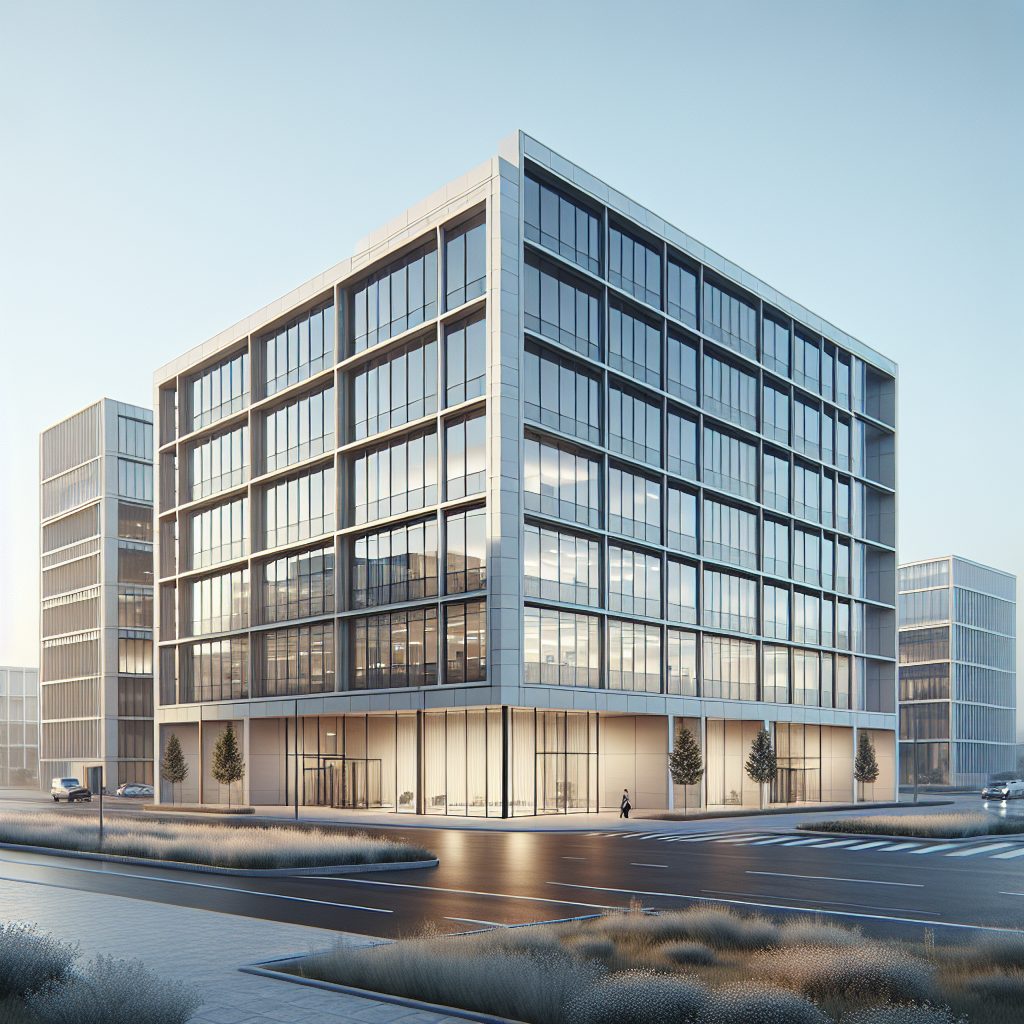
Asch, Switzerland has become an increasingly practical location for companies that want to stay close to larger economic centers while keeping day-to-day operations efficient. For many teams, the immediate question is not simply “Where can we find an office in Asch?” but rather “How do we secure flexible office space in Asch that can expand or contract as our headcount and project pipeline change?”
This article outlines how to evaluate office rental in Asch when flexibility and future scalability are priorities. It also covers adjacent needs that often accompany office decisions in a commercial building: large offices in Asch, coworking in Asch, and storage rooms in Asch. The goal is practical: help decision-makers align space strategy with growth, cost control, and operational resilience.
Flexible office space in Asch: what “flexible” should mean in practice
The term “flexible office” is widely used, but in a commercial property context it should translate into a measurable set of options:
- Scalable footprint: the ability to add offices, desks, or entire suites without relocating.
- Right-sized lease structure: terms that reflect business reality (project cycles, hiring plans, seasonality).
- Operational simplicity: predictable services (cleaning, internet readiness, meeting spaces) and clear building rules.
- Space mix: private offices combined with shared collaboration areas, quiet rooms, and meeting rooms.
In other markets, listings highlight “flexible lease terms allow for resizing within the building,” demonstrating the underlying concept that matters most to tenants: growth without disruption. A clear example is found in a commercial office listing describing how tenants can resize within the same building under flexible terms (Realmo market listing overview).
For Asch-based companies, this is especially relevant because relocations can be operationally costly: changing employee commutes, IT infrastructure, postal address updates, and internal downtime. A building that supports expansion options reduces these indirect costs over time.
Office rental Asch for growing teams: expansion options without relocating
When companies search for an office in Asch, they often start with a current headcount and a near-term budget. Yet, the better approach is to treat office selection as a multi-year decision with built-in flexibility.
How to assess expansion-readiness in a commercial building
- Availability of adjacent units: Can you take the neighboring office suite later?
- Modular floor plans: Are there options to reconfigure offices into team rooms, project spaces, or client areas?
- Multiple suite sizes: Buildings that offer small-to-large suites usually support staged growth more easily.
- Infrastructure headroom: Power, connectivity, access control, and HVAC capacity matter when headcount increases.
In flexible office models elsewhere, operators explicitly design for this “combine more space as needed” approach, allowing a company to take additional rooms while keeping a coherent presence in one address. For instance, a marketplace description of a multi-suite building notes that tenants can “combine as much office space as needed and leave the rest,” emphasizing incremental scaling rather than forced relocation (OfficeSpace.com example of scalable suite configurations).
In Asch, an expansion-ready commercial property should support similar logic: plan for headcount changes, not just today’s seating chart.
Large offices Asch: when bigger space is still a flexibility strategy
The keyword large offices Asch is often associated with established companies, but larger footprints can be a flexibility strategy even for mid-sized firms—if the space is designed with adaptability in mind.
Examples include:
- Project-based teams that need temporary high-density seating during delivery phases.
- Hybrid organizations where office attendance varies but peak days require more capacity.
- Client-facing operations needing meeting zones, training rooms, and reception functions.
Large office suites become “flexible” when the interior can shift between open plan, private offices, and collaboration zones without major construction. The key is avoiding layouts that lock tenants into a single way of working.
Coworking Asch and serviced workspaces: how they complement private offices
Coworking has evolved from a freelancer-only concept into a useful layer in many companies’ space strategies. For coworking in Asch, the value often lies in buffering uncertainty: adding desks and meeting access quickly without committing to long fit-out cycles.
In flexible workspace markets, the most common coworking and serviced office components include:
- Meeting rooms included as part of membership or office packages.
- Flexible leases, often month-to-month, that allow resizing without multi-year commitments.
- Fully serviced offices where internet, cleaning, and core amenities are bundled.
These features are frequently cited in serviced office models. For example, a flexible office provider describes “meeting rooms included,” “month-to-month office space leases,” and “fully serviced” operations (wifi, cleaning, and more) as standard components (Tandem Space description of flexible office amenities).
In Asch, the practical takeaway is not that every company should choose coworking. Rather, the building strategy should allow a company to combine:
- Private offices for core operations and confidentiality, with
- coworking-style flexibility for overflow capacity, project teams, and visiting colleagues.
When coworking is relevant in a broader ecosystem, concepts such as the5thfloor.ch provide a reference point for modern coworking approaches—often emphasizing hospitality-level shared space, meeting infrastructure, and a professional environment suitable for client work.
For teams looking for a dedicated coworking option in the region, it can also be contextually useful to explore coworking.p201.ch as an example of how coworking is structured and positioned as part of a wider workspace offering.
Storage rooms Asch: why storage matters for office decisions
Many tenants underestimate the operational value of on-site or nearby storage. Yet “where do we store equipment and documents?” is often the question that becomes urgent after move-in.
Storage rooms in Asch are relevant for:
- Professional services (archiving, case files, regulated retention requirements).
- Engineering and technical teams (tools, spare parts, demo equipment).
- E-commerce and product businesses that need staging areas for shipments or samples.
A well-designed commercial building should offer storage options that align with office usage: easy access, security, and clear policies for loading/unloading. For companies that anticipate expansion, storage capacity should scale as well—not just desk space.
Commercial property Asch: evaluating a building as an operational platform
Searching for commercial property in Asch should go beyond square meters and rent. A building is an operational platform that influences how efficiently a company works.
Key evaluation criteria include:
- Access and parking: employee commute practicality and client access.
- Building security: access control, visitor management, and after-hours policies.
- Shared infrastructure: meeting rooms, communal zones, and building services.
- Future-proofing: adaptability for hybrid work, higher bandwidth requirements, and evolving compliance needs.
In broader CRE databases, tenants commonly filter by “space uses” such as office, coworking, warehouse, flex, and storage—reflecting how modern occupancy often requires a mix of functions in one location (Realmo space-use categories overview). The same thinking applies locally in Asch: the best properties are those that can support multiple work modes without forcing structural change.
Long-term perspective: designing for growth, change, and cost stability in Asch
Long-term office decisions succeed when they anticipate change. In practice, this means structuring your Asch workspace strategy around:
- Scenario planning: What happens if headcount grows 30%? If it shrinks 15%? If teams become more hybrid?
- Cost stability: Not only rent, but fit-out costs, IT moves, and productivity disruption.
- Lease and space governance: Clear internal rules for desk allocation, meeting room usage, and storage access.
From an asset and portfolio perspective, it can be helpful to look at operators with multiple commercial sites and projects, because they often structure buildings to meet varied tenant needs. For example, the broader portfolio approach of sitEX provides context on how commercial properties can be developed and managed across different use-cases, which is relevant when considering long-term expandability and operational consistency.
Similarly, looking at other commercial developments such as k7bubendorf.ch can provide an additional reference point for how multi-tenant commercial projects are positioned, particularly when flexibility and professional building standards are central to tenant requirements.
Conclusion: flexible office space in Asch as a strategic choice, not a short-term fix
Choosing flexible office space in Asch with expansion options is ultimately a decision about risk management and continuity. The right office rental in Asch allows a company to adapt without operational disruption, while also accommodating adjacent needs such as storage rooms in Asch and potential access to coworking in Asch for overflow or hybrid capacity.
From a commercial real estate standpoint, the most durable solution is a scalable building strategy: one that supports growth and change within the same address, provides practical infrastructure, and aligns space configuration with business realities over several years.