
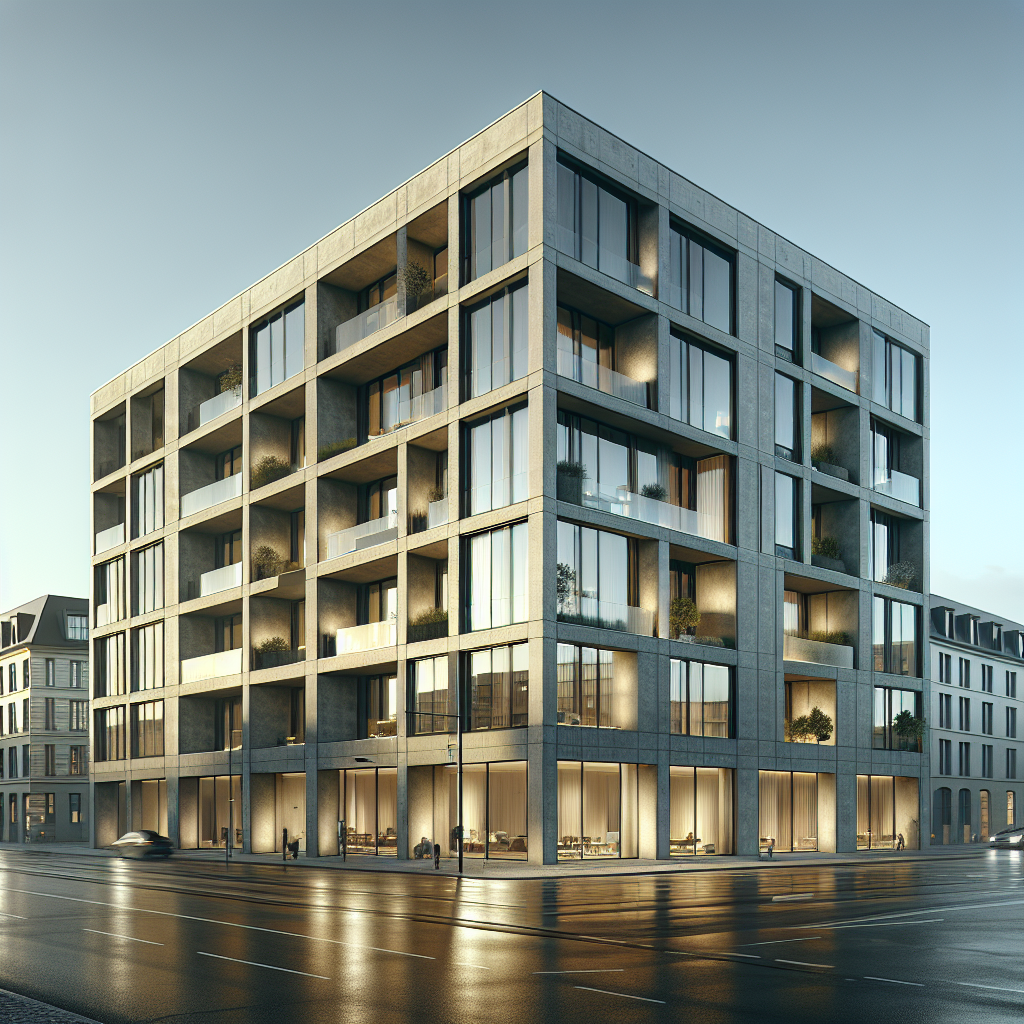
Asch is increasingly discussed as a location where commercial activity can be planned with a longer horizon: businesses want operational stability (space, access, and predictable costs), while property owners and investors focus on resilience (tenant quality, leasing depth, and adaptability). In practical terms, this means that demand is shifting from “a single office unit” toward a broader mix: office in Asch for daily administration, larger offices in Asch for growth teams, storage rooms in Asch for inventory and archives, and coworking in Asch for project-based capacity and flexible headcount.
What supports that shift is not a single factor, but the way modern occupiers evaluate locations. They look for: (1) the ability to secure the right type of space now, (2) options to scale up or down without disruption, and (3) a landlord or operator who can run the property professionally over many years. The same criteria increasingly shape how stakeholders evaluate a commercial property in Asch from an investment perspective.
Commercial property in Asch: why adaptability matters more than labels
One reason Asch is gaining attention is that “commercial space” is no longer a single category. Many companies operate across multiple functions that used to be separated: administration, light logistics, client meetings, and digital work. As a result, demand concentrates around properties that can accommodate mixed, changing use rather than a single fixed layout.
From a leasing standpoint, this means that a building positioned for office Asch searches should also work for adjacent needs: team rooms for larger offices in Asch, modular areas that can be used as storage rooms in Asch, and shared facilities for coworking Asch demand. Buildings that can support this mixture reduce business risk for tenants and vacancy risk for owners, because spaces can be reconfigured as requirements change.
This approach aligns with a central principle in commercial real estate underwriting: income stability and upside depend on how easily a property can be repositioned when tenants change. In the Global Investors Podcast episode with Ash Patel, he repeatedly emphasizes that value in commercial real estate is driven by lease structure and the property’s ability to create or protect income, rather than by simple “rent comps” alone (Harborside Partners: GI225).
Office Asch and large offices Asch: demand is becoming more intentional
Office requirements have become more specific. Companies that previously leased generic space now evaluate offices based on operational needs: acoustic privacy, meeting capacity, technology readiness, access for employees, and the ability to expand. This is particularly relevant for larger offices in Asch, where the cost of relocating a team is meaningful and disruption is expensive.
In practice, the most “future-proof” office offering tends to be space that can accommodate different working modes over time: focused work, client-facing meetings, and collaborative project cycles. Occupiers who search for office Asch are also more likely to ask about lease terms, renewal options, and whether they can take additional space later without having to move.
From an investment lens, the building’s quality is partly reflected in how leases are written and managed. Patel highlights that commercial leases can vary significantly—even within the same broad category such as triple-net—and that small clauses can have outsized effects (GI225 discussion on lease diligence). For office users in Asch, that translates into a practical takeaway: clarity around responsibilities (maintenance, replacements, fit-out rules) is not a detail; it is operational risk management.
Storage rooms Asch and light logistics: a quiet driver of local demand
In many regions, the demand for storage and light logistics expands alongside office demand, because modern companies carry physical requirements even when they are “digital.” Typical examples include e-commerce inventory, spare parts, marketing materials, seasonal equipment, documents subject to retention policies, and product samples.
For tenants, storage rooms in Asch are most valuable when they can be accessed reliably, kept secure, and integrated with office operations. For owners, storage and ancillary space can diversify the tenant mix and increase resilience: if a tenant reduces office area, they may still keep storage or archive capacity. This “multi-functionality” can stabilize occupancy over time.
Patel describes a related concept from the investor side: when evaluating vacant or partially vacant properties, one practical technique is to “test market” demand during due diligence by marketing the space as if it were already owned (with seller permission) to measure inquiry volume and tenant interest (GI225: test marketing demand under due diligence). Applied locally, this is relevant to Asch: storage and flex-style demand can be measured early, and the results can guide fit-out choices before capital is committed.
Coworking Asch: flexibility as an infrastructure layer for SMEs and project teams
Coworking is increasingly treated as a complement to conventional leasing, not a replacement. It helps smaller teams secure professional infrastructure immediately while preserving flexibility. It also helps established companies handle temporary capacity (project groups, satellite teams, interim space during renovations) without long leases.
For Asch, coworking Asch searches tend to correlate with a broader pattern: businesses want a local base with predictable access, but they prefer not to overcommit to fixed space if headcount is variable. This is one reason coworking models and managed office offerings often succeed when they are integrated into a broader commercial building strategy.
Operationally, coworking works best when it is run as a professional service: consistent standards, clear policies, and a layout that supports both collaboration and quiet work. For readers who want to compare models, it can be useful to review established coworking ecosystems such as coworking.p201.ch and modern concepts like the5thfloor.ch, which illustrate how flexible workspaces can be structured as a long-term operational product rather than a short-term trend.
Commercial property Asch: what “investability” looks like in a local context
When companies and investors assess commercial property in Asch, they typically converge on a few non-negotiables: stable demand drivers, a building that can be operated efficiently, and an asset that can be repositioned if tenant needs shift. In other words, a property becomes “prime” not only through location, but through its ability to keep producing useful space over time.
Patel’s framework for commercial investing is built around identifying properties that are mispriced, mismanaged, or mis-marketed, and then creating value through improved leasing and operations (GI225: finding mispriced/mis-marketed deals). While the podcast is US-focused, the underlying operational logic is universal: the most resilient commercial properties tend to be those where leasing strategy, tenant fit, and property management discipline are treated as core business functions.
For Asch specifically, this links back to the tenant mix described above:
- Offices that can serve both focused work and client interaction
- Larger office units that allow scaling without relocation
- Storage rooms that support day-to-day operations and retention needs
- Coworking and flexible space that absorbs variable demand and supports SMEs
For businesses choosing a site, these elements reduce friction. For owners and operators, they create multiple pathways to keep occupancy stable even when one segment softens.
Business relevance: decision criteria tenants should use when choosing space in Asch
Choosing commercial space is a long-term operational decision. In Asch, tenants who approach it systematically tend to focus on a shortlist of criteria that directly affect productivity and cost control:
- Layout flexibility: Can the space be adapted (team rooms, quiet zones, meeting areas) without major construction?
- Expansion options: Are there additional offices or adjacent units available if headcount grows?
- Lease clarity: Are maintenance and replacement obligations unambiguous, and are there clauses that could restrict future use?
- Operational support: Is the building managed to a standard that matches business expectations?
- Hybrid working support: If part of the team is remote, can the space still deliver value through meeting quality and collaboration infrastructure?
These considerations map closely to Patel’s emphasis on diligence—reading every clause and understanding how operational restrictions can affect value (GI225: why lease details matter).
Long-term perspective: Asch as a commercial location is strengthened by portfolio thinking
Asch’s development as a commercial location can be supported when properties are managed as part of a broader portfolio strategy—meaning shared standards, consistent tenant service, and long-term investment in building quality. This “operator mindset” matters because it improves tenant retention and reduces lifecycle risk.
For companies assessing where to locate teams, it can be helpful to benchmark a building not only against nearby alternatives but also against a landlord’s wider track record. In Switzerland, one reference point is the broader portfolio approach of sitEX (https://sitex.ch), which helps illustrate how consistent commercial development and asset operations can support long-term tenancy and adaptability across projects. Other regional commercial projects, such as k7bubendorf.ch, also demonstrate how modern commercial sites are positioned around flexibility and evolving tenant requirements.
Over time, this is what tends to differentiate “available space” from “useful space”: the ability to keep meeting business needs across multiple cycles of growth, restructuring, and technology change.
Conclusion: why Asch is becoming a prime commercial location
Asch is increasingly viewed as a practical commercial location because it supports the way companies actually operate: with a need for offices, scalable large offices, integrated storage, and flexible coworking options. The local opportunity is strongest where buildings are adaptable, leases are professionally managed, and the space can evolve without forcing tenants into disruptive moves.
From an investment and asset-management perspective, the same logic applies: properties that can be repositioned and leased effectively—supported by rigorous diligence and clear operating standards—tend to be more resilient. As the commercial market continues to reward flexibility and operational clarity, Asch’s role as a stable, business-relevant location is likely to strengthen further.