
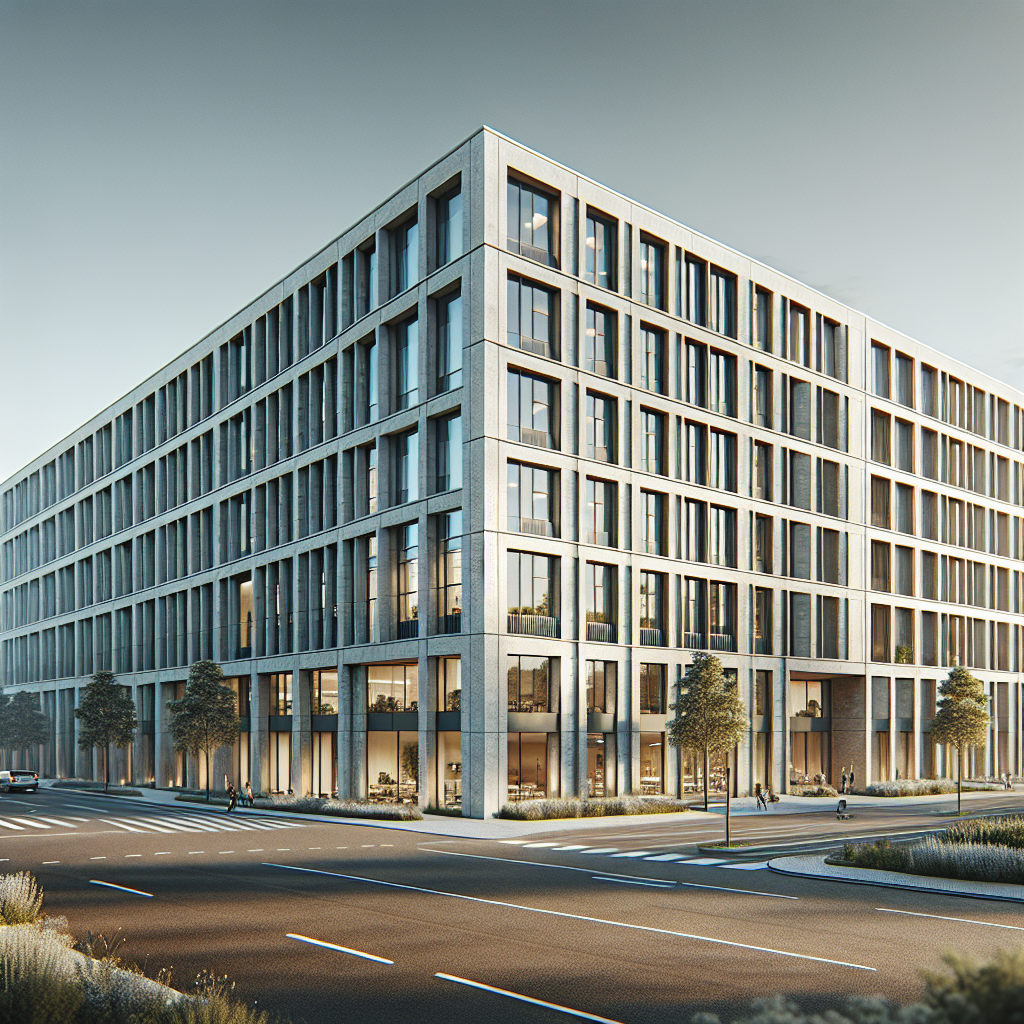
Coworking in Asch (Switzerland) is increasingly used as a professional “third place” between classic leased offices and home office. For companies and self-employed professionals, the value is less about trends and more about operational flexibility: a workspace in Asch that can scale up or down, includes the basic infrastructure, and supports focused work as well as client-facing meetings.
This article outlines how coworking and flexible office models in Asch fit into broader commercial property decisions, including when to choose private offices, when larger offices are more appropriate, and how storage rooms in Asch can complement workspace needs. The goal is a practical view of office Asch options with a long-term lens.
Coworking Asch: what “flexible workspace” means in practice
In day-to-day operations, “coworking Asch” typically refers to a serviced environment where desks or offices are available with a short commitment and predictable inclusions (internet, cleaning, meeting room access rules, shared kitchen). This reduces administrative overhead compared with a conventional lease, where services, fit-out, and facility management are usually arranged separately.
Across the Basel Area, many coworking operators position their offer as a flexible alternative to traditional 5–10 year contracts, enabling businesses to adapt quickly to headcount changes, project work, or hybrid working patterns. This flexibility is also emphasized by Coworking Switzerland’s company-oriented overview, which highlights how coworking allows organizations to adjust space needs without long-term commitments and to use meeting rooms of different sizes as required.
From a local search perspective, businesses evaluating a workspace in Asch often compare three baseline options:
- Hot desk / flexible desk for intermittent presence in Asch or for near-home office patterns.
- Dedicated desk for consistent work routines and predictable seating.
- Private office / project office for teams needing confidentiality, stable collaboration, or client-facing work.
In mixed portfolios of commercial property Asch, coworking can sit alongside more conventional rentals such as small offices, large offices, and storage rooms—allowing businesses to build a “right-sized” footprint rather than leasing surplus space.
Workspace Asch for companies: the business case beyond cost
Cost control matters, but the business relevance of coworking in Asch is often better explained in terms of time-to-productivity and organizational resilience. A serviced workspace can shorten setup time because the essentials are usually ready on day one: furniture, network access, printing, and basic shared amenities.
For established companies, coworking can also function as a local hub office. Coworking Switzerland describes this as a way to provide “near home offices” for employees, balancing reduced commuting with the benefits of a professional setting and social interaction. This is relevant for Asch-based teams serving clients in the region as well as for companies that want a local presence without committing to a full long-term lease.
Typical high-value use cases in Asch include:
- Project teams that need a shared base for a fixed duration.
- Sales or client service roles needing reliable meeting space and a professional address.
- Hybrid teams seeking a structured environment several days per week.
- Startups that prioritize flexibility, fast onboarding, and the ability to expand without relocating.
When coworking in Asch is not the right solution
Commercial real estate decisions are strongest when they also define what not to choose. Coworking is not always the best fit for companies that require full control over access, IT environments, or acoustic/privacy conditions. Research from the Basel Area coworking market highlights that privacy-driven companies may be better served by renting a private office rather than relying on shared infrastructure.
A practical decision rule for Asch is to map your work patterns to space types:
- High confidentiality (HR, legal, sensitive client data): prefer private offices or a dedicated suite.
- Regular collaboration with fixed teams: consider dedicated offices or larger offices in Asch.
- Variable attendance: coworking desks can be more efficient than leasing permanent seats.
Large offices Asch vs. flexible workspace: planning for growth and stability
Businesses searching for “large offices Asch” often reach a point where coworking alone becomes operationally limiting. Typical triggers include:
- Headcount that requires consistent adjacency and predictable availability.
- Equipment needs (specialized hardware, secure storage, product samples).
- Branding and client experience requirements.
- Internal processes that benefit from controlled access and standardized layouts.
That said, coworking and larger offices are not mutually exclusive. A common long-term model is a “core-and-flex” footprint: a stable office in Asch sized for baseline staff, complemented by flexible coworking capacity for peaks, trainees, short-term hires, or visiting colleagues.
For organizations managing space across multiple locations, it can be useful to benchmark options within a broader provider portfolio. In Switzerland, developers and operators such as sitEX provide a wider view of commercial property strategies that can include offices, flexible workspace concepts, and complementary space types depending on the municipality and catchment area.
Storage rooms Asch: the overlooked component of efficient commercial property
Search intent around “storage rooms Asch” often comes from businesses that are otherwise well served by small offices or coworking but still need space for inventory, archives, marketing material, tools, or seasonal equipment. In many service businesses, storage is the hidden driver of office clutter, inefficiency, and avoidable rental costs—especially when valuable office square meters are used for non-office functions.
From a practical standpoint, separating “work” space from “store” space can improve both:
- Work quality: less noise and fewer distractions, clearer desk policies, better client impression.
- Space economics: pay office rates only for space that functions as office space.
- Compliance: better control of document retention and secure archiving where required.
When evaluating a commercial property in Asch, it is worth checking whether storage options are available within the building or nearby. This can materially affect how long a flexible workspace remains viable before a move to larger offices becomes necessary.
Coworking features that matter: accessibility, zoning of work modes, and meeting rooms
Not all coworking environments are equal. Practical guidance from the Basel Area market emphasizes three factors that consistently influence satisfaction:
- Accessibility for employees and clients (public transport, parking, predictable entry procedures).
- Variety of work settings, such as open collaboration areas, silent booths for focused work, and meeting rooms in different sizes.
- Included essentials such as coffee/tea, reliable Wi-Fi, printing, and cleaning—so teams do not rebuild office operations from scratch.
Meeting infrastructure is often the decisive factor for companies using coworking in Asch as their client-facing base. In the Basel Area, meeting room pricing commonly starts at a half-day level (for example, Switzerland Innovation Park Basel Area lists meeting rooms starting from CHF 90 per half-day) and can scale depending on size, equipment, and location. These benchmarks help teams estimate whether they should rely on ad-hoc meeting bookings or secure a package with included meeting hours.
Another differentiator is density and “true workspace” per person. One Basel operator cited an average of 9 m² of true workspace per person in private and project offices—excluding corridors and common areas—positioned as significantly more generous than typical coworking layouts. While this figure is market-specific, it highlights an important evaluation metric: whether the space supports focus and comfort over long working days.
For readers comparing coworking concepts and service levels, modern Swiss offerings can range from lean, access-controlled models to hospitality-oriented environments. A useful reference point for contemporary coworking positioning is the5thfloor.ch, which illustrates how providers structure access control, desk types, and business address services within a more systematized member experience.
Connecting coworking Asch to the regional ecosystem
Asch is part of a broader economic area where companies often balance local presence with access to regional networks. Research on the Basel Area coworking landscape notes that established companies may value coworking for participation in a dynamic community and easier access to partners, contractors, and potential hires. This “ecosystem effect” is difficult to quantify in a spreadsheet, but it influences long-term decisions about where to place satellite offices or project teams.
For businesses that require additional flexibility across different building types or locations, it can be helpful to understand how coworking integrates into wider commercial development approaches. Alongside sitEX’s portfolio view, other Swiss commercial projects such as k7bubendorf.ch can provide context on how office, light commercial, and mixed-use ideas are implemented in practice across municipalities—useful when planning for future expansion beyond Asch.
Long-term perspective: designing a workspace strategy for Asch that can evolve
A long-term workspace strategy for Asch usually benefits from planning in horizons rather than committing prematurely to a single format. A practical framework is to design for three timeframes:
- 0–6 months: prioritize speed and flexibility (coworking desks, short-term private offices, minimal fit-out).
- 6–24 months: stabilize processes (dedicated team office, consistent meeting routines, add storage rooms where needed).
- 24+ months: optimize for identity and efficiency (large offices Asch, controlled access, customized layouts, potential multi-site strategy).
In this model, coworking in Asch is not a temporary compromise; it is a tool for managing uncertainty responsibly. It can also remain a permanent component for specific functions (client meetings, touchdown desks, near-home office support) even after a company transitions into larger office space.
For organizations considering a structured coworking environment linked to an existing office building concept, platforms such as coworking.p201.ch can be relevant where a professional coworking offer is integrated into a broader property context—often important for companies that want both flexibility and a stable address identity in the region.
Conclusion: coworking and commercial property options in Asch
Coworking Asch and workspace Asch queries are increasingly part of the same decision landscape as office Asch, large offices Asch, and storage rooms Asch. The most robust approach is to treat flexible workspace as one component of a commercial property strategy: useful for rapid setup, hybrid work, and project cycles—while recognizing when privacy, scale, or operational control justify a move into dedicated offices.
By evaluating accessibility, the availability of quiet and collaborative zones, meeting room options, and the ability to add storage space, businesses can choose a workspace environment in Asch that supports day-to-day performance and remains adaptable over time.
Sources: Basel Area coworking market overview and pricing benchmarks from Swiss Innovation Park Basel Area; company-focused coworking benefits from Coworking Switzerland.