
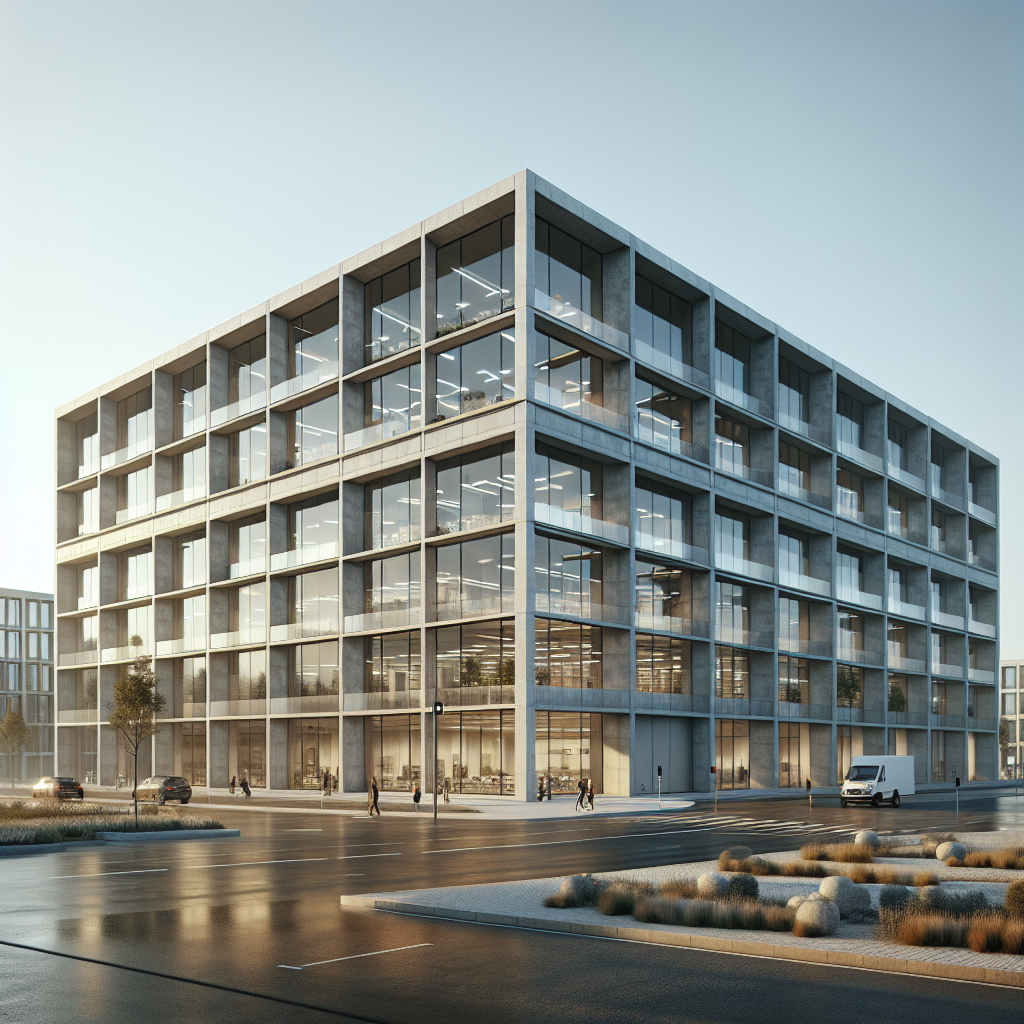
Asch in Switzerland sits in a part of the region where businesses often need space that can evolve: a quiet, professional office for administration, a larger floorplate for teams, and reliable storage or warehouse capacity that supports daily operations without friction. For companies comparing an office in Asch with large offices in Asch, or weighing storage rooms in Asch against a dedicated warehouse in Asch, the practical question is usually the same: how do you secure space that supports growth while keeping logistics and commuting predictable?
This article outlines how a commercial real estate building in Asch can serve office users, small-scale logistics, and hybrid working models. It also explains what to check when your priority is warehouse rental in Asch with strong transport access—including when it makes sense to use external logistics services rather than expanding your footprint.
Office in Asch: what occupiers typically need (beyond square meters)
Search behavior around “office Asch” often reflects a set of operational requirements rather than a preference for a particular architectural style. Most office occupiers evaluate Asch locations through four lenses:
- Access for staff and visitors: dependable travel times matter more than proximity on a map.
- Layout flexibility: teams grow, and space should allow reconfiguration without major disruption.
- Building services: heating/cooling reliability, lift access, loading possibilities, and IT readiness.
- Adjacency to storage: even office-led businesses frequently need storage rooms for archives, equipment, samples, or returns.
In practice, the most resilient “office in Asch” decisions combine a stable core office area with modular add-ons—meeting rooms, project zones, or short-term team space—so the building can adapt as headcount or workflow changes.
Large offices in Asch for growing teams: balancing scale with controllable operating costs
Companies searching for large offices in Asch are usually optimizing for two competing goals: more space and more predictability. Larger floorplates can simplify operations (fewer split locations, easier communication), but only if the space remains efficient to run.
From an occupier’s standpoint, large offices are most effective when they support clear zoning:
- Quiet zones for concentrated work and administration
- Collaboration zones for projects and client meetings
- Support zones for IT, print, storage, and internal services
When a commercial property in Asch is designed or managed with these zones in mind, tenants can scale without continuously redesigning operations. This is also where storage integration becomes important—particularly for businesses with physical products, technical documentation, or service equipment.
Storage rooms in Asch: when “a little extra space” becomes a strategic advantage
Storage rooms in Asch are not only relevant for classic warehousing users. Many office-centric businesses benefit from dedicated storage because it protects productivity: fewer disruptions, less clutter, and clearer accountability for inventory and assets.
Storage becomes particularly relevant for:
- Service companies with tools and spare parts
- Medical, technical, or industrial suppliers with samples and consumables
- E-commerce teams with returns processing or packaging materials
- Project-based businesses that rotate equipment across sites
If you anticipate regular inbound/outbound movement, storage should not be treated as an afterthought. The right combination of access (loading, lift, internal routes) and basic controls (security, clear labeling standards, optional temperature management where relevant) can reduce handling time and operational errors.
Warehouse in Asch and logistics in Asch: evaluating transport access the right way
Demand for warehouse Asch and logistics Asch typically comes from companies that want to shorten delivery cycles, buffer inventory, or handle B2B distribution from a predictable base. “Transport access” in real operations usually means three things:
- Reliable local access for vans and trucks (including turning, loading, and time windows)
- Predictable regional connectivity for scheduled collections and deliveries
- Operational continuity—the ability to keep moving goods even when staffing or demand fluctuates
One long-term consideration is whether you want to run logistics internally or partner with a third party logistics provider (3PL). 3PL models can reduce complexity by bundling transportation, warehousing, distribution, and inventory processes. Ash Logistics, for example, describes 3PL as an external supplier performing “all or part of the company’s logistics functions,” including transportation and warehousing under one roof, often paired with inventory and documentation processes (Ash Logistics – Warehousing and 3PL).
For some businesses, the next step is 4PL coordination—an integrator model that manages multiple logistics suppliers and focuses on complexity and time. The 4PL approach is positioned as a way to coordinate different outsourced activities and link them via personnel and IT (Ash Logistics – 4PL overview). While the referenced example is not Switzerland-specific, the strategic principle applies: as logistics becomes multi-node, coordination costs can rise unless roles and systems are clear.
For local occupiers in Asch, the practical takeaway is to assess whether warehouse rental is intended for:
- Simple storage (buffer stock, archives, equipment)
- Active handling (picking, packing, returns, kitting)
- Distribution (scheduled dispatch, cross-docking, consolidation)
Your answer determines how critical loading infrastructure, yard access, and internal workflow design are, and whether external logistics services should complement the on-site footprint.
Coworking in Asch: flexible work models that still require operational discipline
Searches for coworking Asch often reflect a desire for flexibility—shorter commitments, a professional setting, and shared services. In commercial property planning, coworking is most valuable when it complements long-term office space rather than competing with it.
For example, companies with a stable headquarters often use coworking for:
- Project teams that need temporary expansion space
- Hybrid work patterns where not everyone is on-site every day
- Client meetings that should happen in a neutral, professional environment
Within the broader sitEX context, it can be useful to view coworking as part of a spectrum of workspace solutions—ranging from dedicated offices to flexible collaboration areas. Exploring the wider portfolio at sitEX can help organizations compare formats and find the right fit for different phases of growth.
Where coworking is relevant as a ready-to-use option, platforms like coworking.p201.ch provide a reference point for how flexible workspace can be organized operationally—especially for teams that need a professional base without committing to a full-scale long-term fit-out.
Commercial property in Asch as a long-term operating base: planning for change, not just today’s needs
Whether you are prioritizing an office in Asch, a warehouse in Asch, or a mixed model, the long-term value of a location is determined by how well it supports change. The most common changes that drive relocations—often earlier than expected—include:
- Team growth or reorganization
- New product lines that require storage, sampling, or dispatch
- Higher compliance expectations (documentation, traceability, security)
- Hybrid work shifts that reduce desk demand but increase meeting/project demand
A commercial building in Asch that offers multiple space types (offices, larger units, storage rooms, and practical access) can reduce the need to move when those changes happen. It also makes it easier to separate functions—quiet admin, customer-facing space, and operational storage—without splitting across several addresses.
From a portfolio perspective, it’s also helpful to look at comparable commercial development approaches in the region. Projects such as k7bubendorf.ch illustrate how commercial sites can be positioned for modern occupier expectations—efficient use, clear access, and long-term usability rather than short-term trends. For businesses that want coworking-inspired layouts inside a more traditional lease structure, concepts like the5thfloor.ch provide a useful benchmark for how collaboration, privacy, and service elements can coexist.
Neutral conclusion: choosing the right mix of office, storage, and logistics in Asch
Asch is a practical location for businesses that need a reliable base with room to adapt—whether the immediate requirement is an office in Asch, large offices for growing teams, storage rooms for operational stability, coworking capacity for flexible staffing, or a warehouse in Asch with strong transport access.
The most durable commercial property decisions are those that treat workspace, storage, and logistics as an integrated operating system. In some cases, that means expanding on-site storage and handling; in others, it means combining a right-sized warehouse footprint with an outsourced 3PL/4PL approach to reduce complexity and focus internal resources on core work (Ash Logistics – 3PL/4PL principles). Either way, Asch can support business continuity when the space is chosen with operational reality—and long-term flexibility—in mind.